Is a Grand Canyon helicopter tour from Las Vegas worth it?
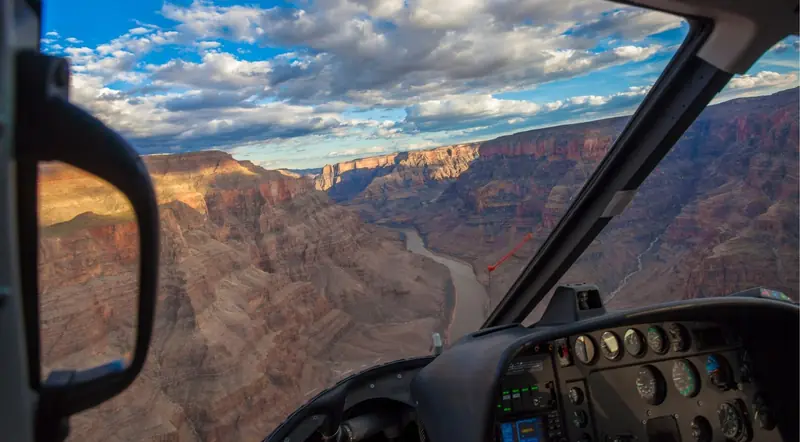
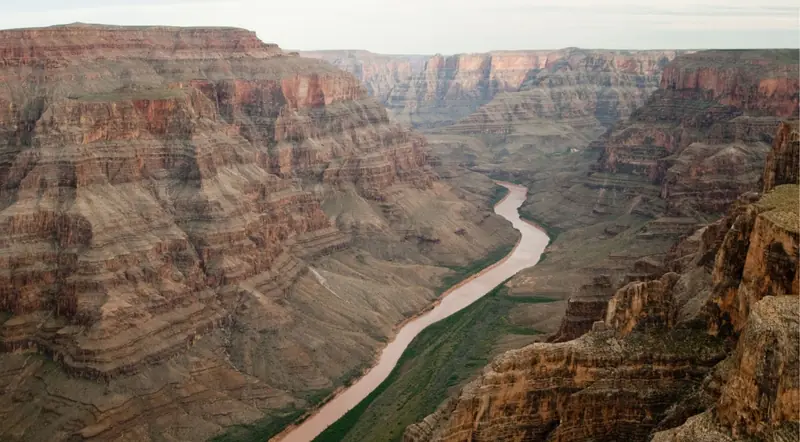
Yes for most first-timers. It is the only half-day way to reach the canyon floor and see the West Rim, Hoover Dam, Lake Mead and the Colorado River in one trip. Air-only flights start in the low $400s; landing tours like the Maverick Wind Dancer champagne landing ($499) add the once-in-a-trip experience of standing below the rim.
What is the difference between a landing tour and a flyover (air-only) tour?
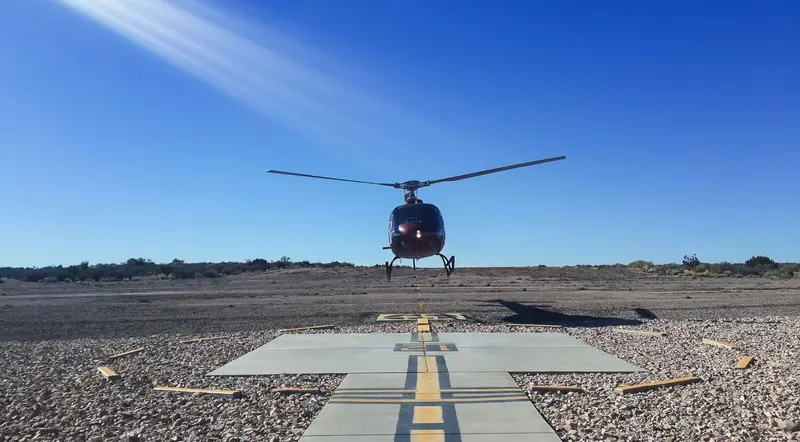
A flyover stays airborne over the West Rim and returns; a landing tour descends and touches down on the canyon floor for roughly 20 to 30 minutes, often with a champagne toast. Landing tours cost more but are the only way to actually set foot inside the canyon.
How long does a Grand Canyon helicopter tour from Vegas take?
West Rim helicopter tours run about 3.5 to 4 hours door-to-door, including Strip hotel pickup, check-in, roughly 45 minutes of flight each way, and canyon time. Fly-in South Rim day trips are a full 9 to 10 hours because they use a fixed-wing airplane transfer. To see how a half-day, full-day or multi-day trip compares, see our Grand Canyon itinerary guide.
Do the helicopters actually land in the Grand Canyon?
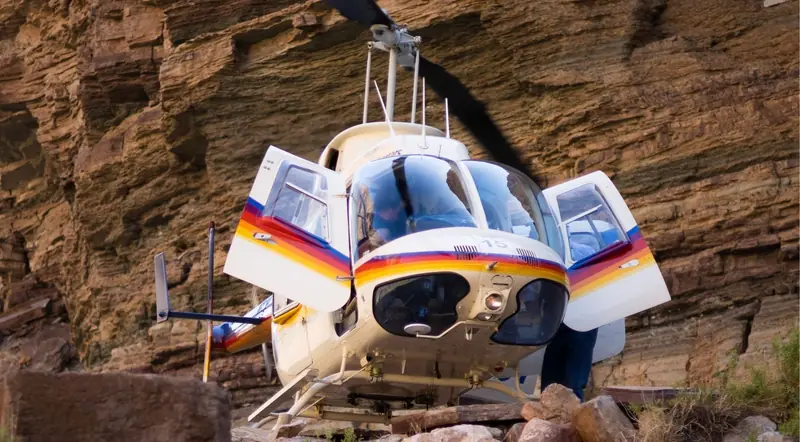
Yes, but only on West Rim tours. The West Rim is the only part of the Grand Canyon where aircraft are permitted to land on the canyon floor; air-only and South Rim tours do not land inside the canyon.
Do these tours land inside Grand Canyon National Park?
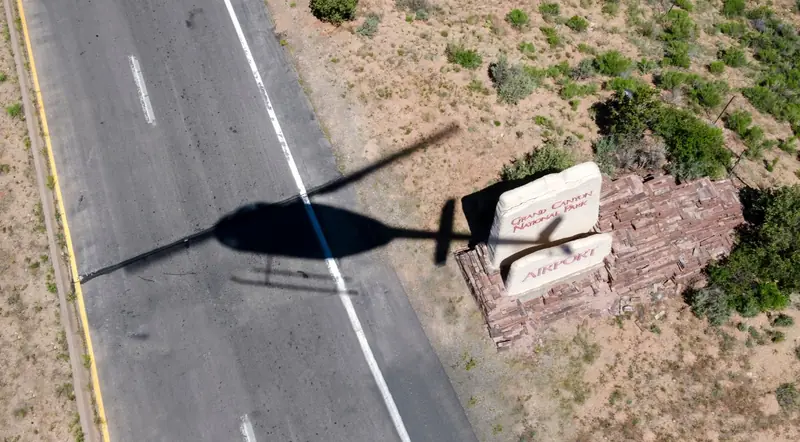
No. Canyon-floor landings happen at Grand Canyon West, which is on Hualapai tribal land, not inside Grand Canyon National Park. FAA and National Park Service rules prohibit helicopter landings below the rim within the National Park.
West Rim or South Rim from Las Vegas — which is better?
Choose the West Rim for a half-day trip with a canyon-floor landing, Skywalk access and Colorado River options; it is about 125 miles and reachable directly by helicopter. Choose the South Rim only if you have a full day and want the canyon's widest panoramas — it is about 280 miles and requires an airplane transfer. For the full breakdown of what's at the West Rim and how to plan a visit, see our West Rim and Skywalk tours guide, or compare the exact distance and drive time to each rim.
Maverick vs Papillon — which operator should I pick?
Both are large, established operators with strong safety programs. Maverick is known for its EcoStar 130 fleet and champagne landings; Papillon is the highest-volume Grand Canyon operator with a wide price range. Compare the specific tour, aircraft, inclusions and total price rather than the brand alone.
Should I book direct or through an OTA like Viator or GetYourGuide?
Prices are usually similar because operators contract their rates. OTAs add convenience, bundled reviews and easy cancellation, while booking direct can occasionally unlock operator-only promos. Whichever you choose, confirm the rim, whether it lands, and what is included before paying.
Are there hidden or extra fees?
The real extras are a Skywalk ticket where it isn't bundled — Grand Canyon West charges $67 for general admission and $99 for the pass that includes the glass bridge — and a second seat, which operators require above 250 or 300 lb depending on the company. Taxes and fuel surcharges are stated as included on the tours that list them, and no operator sells a guaranteed window seat: seating is assigned at check-in by weight and balance. For a full breakdown of what each step up the price ladder actually adds, see our Grand Canyon helicopter tour prices guide.
What is the weight limit on Grand Canyon helicopter tours?
Limits are typically around 300 lbs (about 136 kg) per passenger. Papillon adds roughly a $200 surcharge over 299 lbs; Maverick requires passengers over 300 lbs to buy a second seat. Everyone is weighed discreetly at check-in so weight can be balanced across seats.
Does weather cancel tours, and do I get a refund?
Flights can be delayed or cancelled for high wind, storms or low visibility, since safety comes first. Operators reschedule or issue a full refund for company-cancelled flights, but read the policy, as no-shows and customer-initiated changes are treated differently.
What is the best time of day and season to go?
Morning flights generally have the calmest air and clearest visibility, and early or late light is best for photos. Spring and fall offer mild temperatures and fewer crowds, summer is busiest and hottest, and winter is quieter with crisp views. Book at least 1 to 2 weeks ahead in peak season. For the full season-by-season breakdown, see our best time to visit the Grand Canyon guide.
What should I wear and bring?
Wear comfortable layers and closed-toe shoes; canyon-floor temperatures and wind differ from the Strip. Bring sunglasses, a light jacket, ID and a phone or camera. Avoid loose hats or scarves near the rotors, and keep bags small, as cabin space and total baggage weight are limited.
Is it safe, and is it okay for kids and nervous flyers?
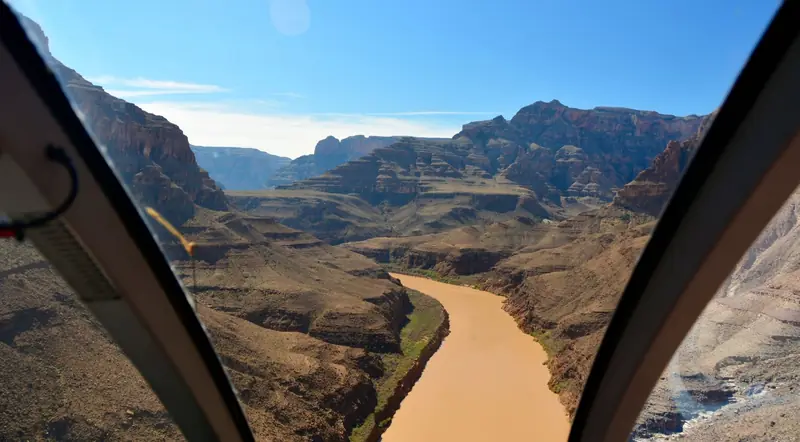
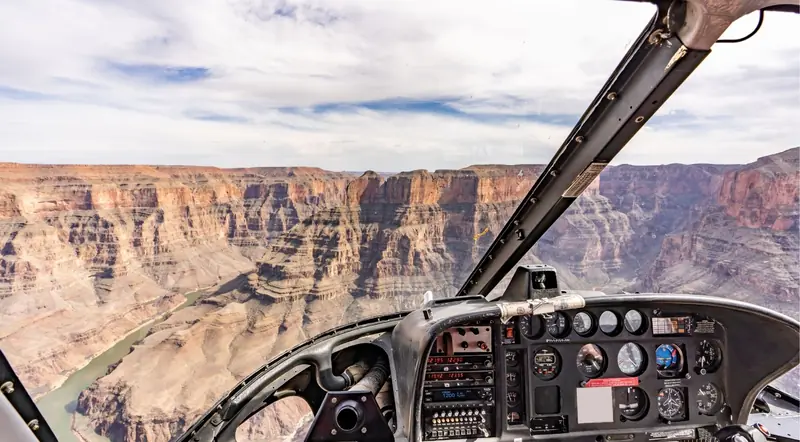
Grand Canyon helicopter tours are a mature, heavily regulated activity with modern EcoStar and AStar aircraft, FAA oversight and experienced commercial pilots. Children are welcome — each child needs a paid seat and is included in the weight balancing — and the EcoStar's 180-degree windshield and forward-facing seats make it comfortable for first-time flyers.