Helicopters fly year-round
Spring & fall: the sweet spots
Spring (March–May) and fall (September–November) are the best all-around times to visit the Grand Canyon from Las Vegas. Temperatures are comfortable, the air is clear, and the crowds are thinner than in peak summer. If you're flexible, aim for these shoulder seasons.
That said, every season works — the right time comes down to your priorities. Chasing the widest clear views for a helicopter flight? The fewest crowds? A snow-dusted South Rim? A comfortable morning on the canyon floor? Each season delivers something different, and the tour type you choose (helicopter, bus, fly-in day trip) can shift which timing makes most sense.
Whatever season you visit, Las Vegas is the ideal base for a range of Southwest experiences. Grand Canyon West Rim helicopter landings, Skywalk day trips, Hoover Dam tours, Colorado River rafting, Valley of Fire and Red Rock Canyon excursions, and South Rim flyovers all operate year-round and pair well with any timing. Browse live availability below.
Each season suits a different kind of visitor. Here's the honest picture for helicopter tours and ground visits alike.
One of the two ideal windows. Days are mild, nights are cool, and the desert can bloom. Crowds build toward late spring but stay manageable early on. Excellent for helicopter tours and canyon hiking alike. Note that the higher-elevation South Rim can still see cold snaps and lingering snow early in the season. Book at least one to two weeks ahead.
The busiest season and the hottest — especially at the lower West Rim and the canyon floor. The cooler, higher South Rim is more comfortable. For helicopter tours, book morning departures to beat the midday heat. July and August bring monsoon season, with afternoon thunderstorms that can cause brief turbulence or occasional flight adjustments. Book 2+ weeks ahead.
Arguably the best season of all. The summer heat fades, monsoon storms taper off, the air is exceptionally clear, and crowds thin after Labor Day. Ideal for every kind of tour. September and October are many visitors' top picks for visibility and comfortable temperatures at every elevation. Late fall starts to cool sharply at the South Rim. Book one to two weeks ahead.
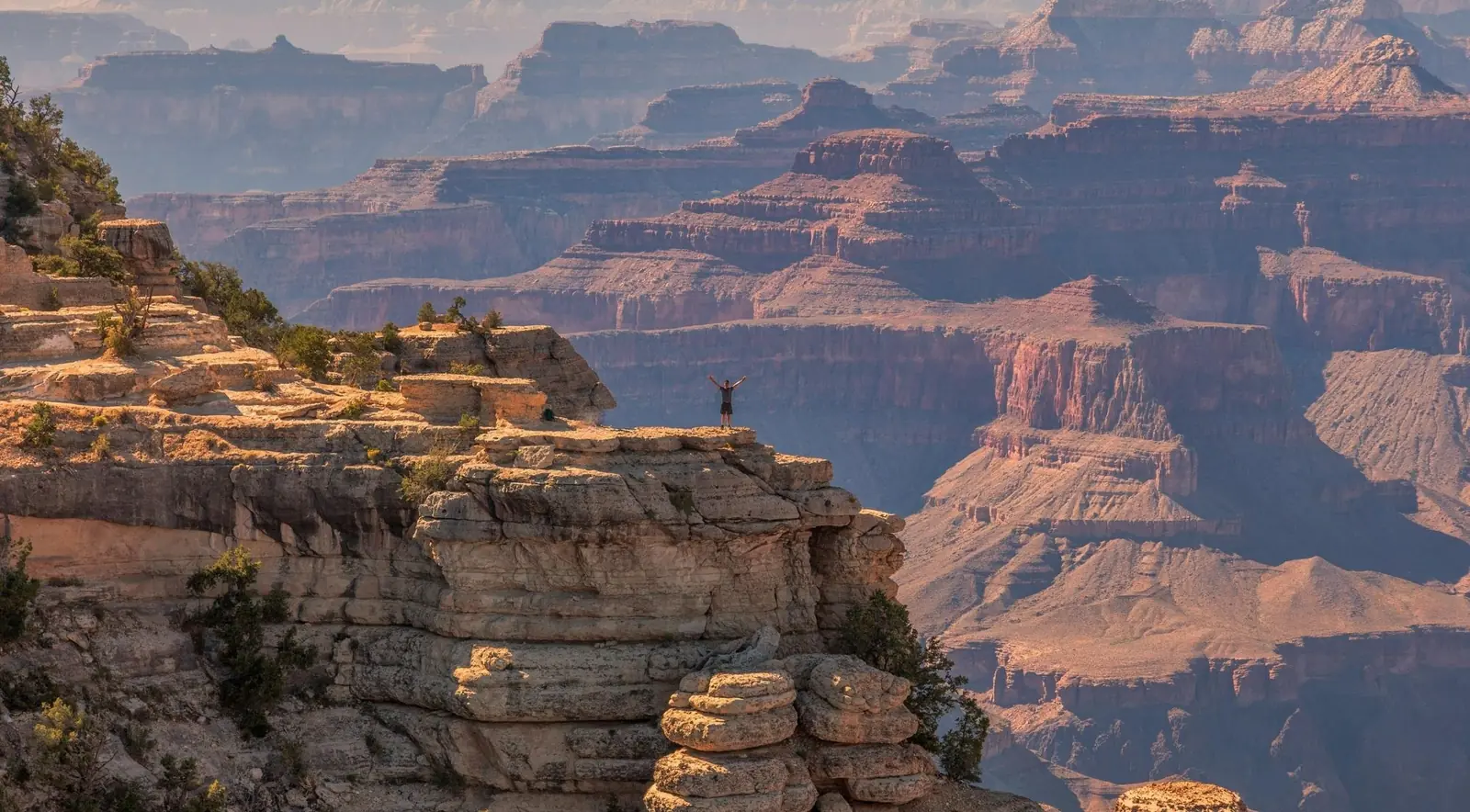
The quietest and often most beautiful season, with crisp, clear views and the chance of snow along the South Rim — a striking contrast against the red rock. The West Rim stays milder and drier. Helicopters fly year-round, and winter's clean air can produce stunning visibility, though days are shorter and some services scale back. Easiest season to find availability without booking far ahead.
The rims sit at very different elevations, which changes your experience dramatically depending on the season. The South Rim is around 7,000 feet above sea level — noticeably cooler than Las Vegas and capable of significant snowfall in winter and cold nights well into spring. The West Rim is lower and warmer, closer to Las Vegas conditions, and generally more comfortable for canyon-floor landings in shoulder seasons. And the canyon floor is hotter still — a summer canyon-floor landing means stepping into intense heat. Pack layers, bring water, and confirm which rim you're visiting before you go.
| Location | Approximate elevation | Season character |
|---|---|---|
| Las Vegas Strip | ~2,000 ft | Hottest and sunniest year-round |
| West Rim (Grand Canyon West) | ~3,600–4,800 ft | Warmer; closer to Las Vegas conditions |
| South Rim (National Park) | ~7,000 ft | Cooler; snow possible October–April |
| Canyon floor (Colorado River) | ~1,200 ft | Hottest of all in summer |
For the full comparison of West Rim versus South Rim — which is better for your trip and what each includes — see our West Rim & Skywalk guide and South Rim tours guide.
Timing within the day matters as much as the season for air quality, light, crowds and temperature on the canyon floor.
Generally the calmest air for helicopter flights and the coolest hours for canyon-floor ground time in summer. Crisp morning light is ideal for photography. Earlier slots tend to book out first in peak season.
The flattest light but clearest overhead visibility — less haze than late afternoon. The most common tour window. Best for seeing the full canyon panorama in sharp, unfiltered detail.
The most dramatic light on the canyon, prized for photography, proposals and special occasions. Sunset helicopter flights trade a little midday clarity for golden light and long shadows across the canyon walls. These fill fastest — book well ahead.
Helicopters fly all year from Las Vegas to the Grand Canyon. For the smoothest ride, choose a morning flight — especially in summer when afternoon heat and monsoon storms build. For the most dramatic scenery, a sunset flight trades a little midday clarity for golden light and long canyon shadows. Spring and fall offer the best combination of comfortable weather and clear air, and often the most competitive pricing compared to peak summer dates.
If you're planning a landing tour to the canyon floor, note that summer canyon-floor temperatures can be intense — morning departures keep floor stops comfortable. Winter canyon-floor visits are brisk and strikingly beautiful. For a full breakdown of every available tour, see the main comparison page.
| Months | Conditions | Crowds | Book ahead? |
|---|---|---|---|
| December–February | Quietest, coolest, crisp views, possible South Rim snow | Lowest | 1 week is fine |
| March–May | Mild, clear, building crowds — one of the best windows | Low–moderate | 1–2 weeks ahead |
| June–August | Hot and busy; book mornings; watch for monsoon storms | Peak | 2+ weeks ahead |
| September–November | Clear, comfortable, thinning crowds — often the best of all | Moderate, dropping | 1–2 weeks ahead |
Sunset and landing tours sell out earliest regardless of season. If a sunset flight or Skywalk combo is on your list, book further ahead than the table suggests. For a full breakdown of what helicopter tour prices look like across seasons, see our pricing guide.
If solitude matters, aim for winter or the early spring and late fall shoulders. Summer, school holidays, and spring break are the busiest periods. Weekdays are quieter than weekends year-round, and early-morning helicopter tours generally beat the crowds regardless of season.
Helicopter tours have a natural advantage over bus tours and self-drive visits: they're faster to reach the canyon, operate in smaller groups, and often depart before the road coaches arrive at the rim viewpoints. Even in peak summer, a morning landing tour reaches the canyon floor well before the day-trip buses are in position. For the most budget-friendly way to make the journey, see our bus day tours guide.
Many travelers point to September and October — warm-but-not-hot days, exceptionally clear air after the monsoon season, and smaller crowds after the summer rush. May is a close second for spring visits. Both windows offer ideal conditions for helicopter tours, canyon-floor landings, and rim walks.
Not if you plan carefully. The West Rim and canyon floor get intense midday heat in June–August, but morning helicopter tours typically arrive before temperatures peak. Bring plenty of water, wear layers you can remove, and choose a tour with a manageable canyon-floor stop rather than extended hiking in summer. The South Rim, at 7,000 feet, stays considerably cooler than the floor and the West Rim.
Yes, and it's more rewarding than many visitors expect. The West Rim stays milder and drier in winter; the South Rim can see snow and frost but offers striking scenery and virtually no crowds. Helicopter tours operate year-round, and winter's crisp air often provides the clearest visibility of any season. Some South Rim roads may close briefly after heavy snowfall, but helicopters are rarely grounded by snow alone.
Significantly. The South Rim sits at around 7,000 feet — considerably cooler than Las Vegas and the West Rim, with snowfall possible from October through April. The West Rim is lower and warmer, closer to Las Vegas conditions year-round. If you're visiting in early spring or late fall and are concerned about cold, the West Rim is the more comfortable choice for a canyon-floor landing or Skywalk day trip.